

Bridging Expertise: GNPC-Kosmos Secondment Advances Capacity Building for Sustainable Growth in Ghana’s Energy Sector
For the Ghana National Petroleum Corporation (GNPC), sustaining growth in the energy sector extends beyond the production of hydrocarbons. It requires the continuous strengthening of technical capability, institutional depth, and the professional confidence of the workforce entrusted with managing the nation’s resources. As Ghana’s National Oil Company (NOC), GNPC is central to developing the expertise required to steward petroleum resources sustainably and competitively.
As Ghana’s upstream petroleum sector transitions from rapid development to a sophisticated phase of asset maturation within the foundational Jubilee and TEN fields, the industry is pivoting toward a strategy defined by technical precision, operational reliability, and institutional depth. By prioritising integrated reservoir management to identify bypassed resources and utilising predictive maintenance to safeguard critical offshore infrastructure, the sector is effectively arresting production decline and ensuring cost-effective operations. This technical evolution is reinforced by strategic collaborations and knowledge exchanges with international partners, which localise global best practices and build the institutional "bench strength" necessary for GNPC to manage complex assets independently. Ultimately, the maturation of these fields serves as a catalyst for innovation, transforming technical challenges into sustainable engines of economic growth and long-term energy security for the nation.
Achieving these goals demands deliberate investment in human capital. GNPC’s long-standing partnerships with international operators, including Kosmos Energy, Tullow Oil, and Eni, extend beyond joint venture participation. These collaborations form a core pillar of a capability-building agenda designed to deepen GNPC’s technical bench strength while supporting complex offshore assets.
The corporation’s focus remains clear: arresting production decline, strengthening organisational capacity, and deepening technical expertise across the upstream portfolio.
Michael Aryeetey, Deputy Chief Executive for Exploration & Production, emphasised the strategic weight of these collaborations:
"Sustaining production in a maturing basin requires more than infrastructure; it requires disciplined subsurface understanding and operational reliability. Our partnerships provide platforms for structured technical exchange. Secondments ensure GNPC builds the internal capability necessary to support complex assets like Jubilee, both today and into the future."
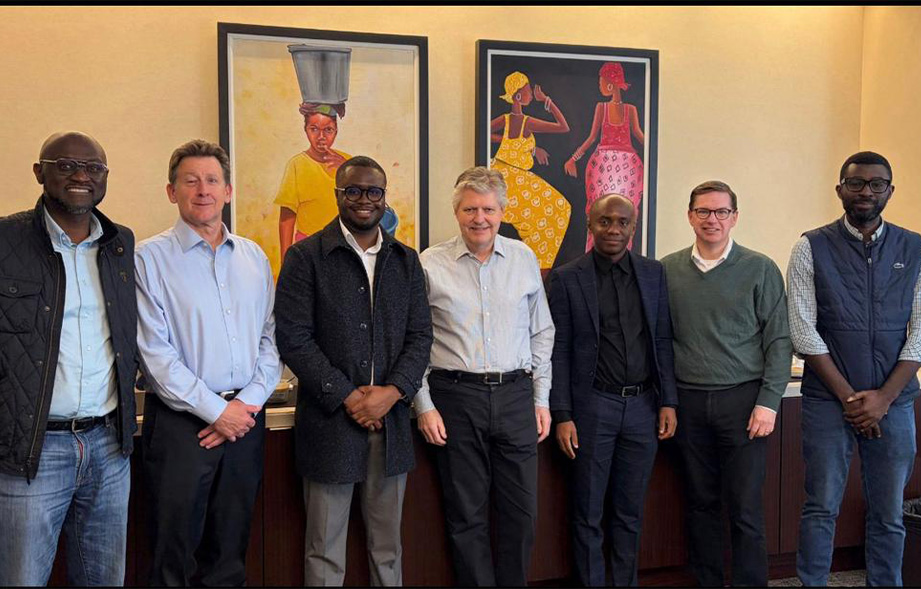
Within this framework, three GNPC professionals, Patrick Gbiel, Kwesi Mensah Duodu-Turkson, and Jones-Jid Yeko Pekyi, recently completed a rigorous 15-month technical secondment with Kosmos Energy in Dallas and Houston.
The professional development of GNPC’s technical talent has been strategically targeted across three critical domains, as demonstrated by the recent secondments of three GNPC professionals to Kosmos Energy.
In Dallas, geophysicist Patrick Gbiel integrated with the Kosmos exploration team to master advanced seismic interpretation and resource evaluation. By focusing on lead maturation and prospect risk, Patrick enhanced his ability to conduct rigorous uncertainty analysis. This expertise is now being channeled back into GNPC to support more robust well selection and ensure that future drilling campaigns are rooted in high-fidelity, data-driven strategies.
Simultaneously, Reservoir Engineer Kwesi Mensah Duodu-Turkson was embedded within the Ghana Business Unit to focus on field characterisation and infill well evaluation. This experience fostered a deep appreciation for seamless multidisciplinary collaboration, bridging the gap between geology, geophysics, and engineering. For GNPC, this translates into a strengthened internal capacity to optimise recovery strategies and extend the life of maturing assets, a vital component for stabilising national production.
In Houston, Petroleum Engineer Jones-Jid Yeko Pekyi worked alongside production teams to enhance the operational reliability of the Jubilee asset. Through an intensive focus on well performance and nodal analysis, Jones gained mastery over predictive analytics and performance monitoring. This exposure directly improves GNPC’s oversight of uptime management and production forecasting, ensuring that field operations remain efficient and resilient. Together, these narrative experiences represent a significant leap in GNPC’s institutional bench strength and its ability to manage the nation's resources with world-class expertise.
The return of these skilled professionals marks a significant milestone for the Corporation, as they bring with them a wealth of global best practices and strengthened international networks. This infusion of expertise creates a vital surge in institutional bench strength, providing the technical depth necessary for GNPC to successfully execute its strategic priorities for 2026.
By leveraging the integrated asset management insights gained abroad, the Corporation is now better positioned to sustain production by implementing advanced strategies to combat the natural decline of mature fields. Furthermore, this newly refined expertise in disciplined seismic analysis is being directly applied to advance exploration efforts across new acreage, ensuring a more rigorous approach to discovering future resources. Perhaps most importantly, this transition empowers GNPC to embrace data-driven decision-making, shifting the organisational culture from reactive troubleshooting to a proactive model of asset oversight. Ultimately, these returning experts serve as the catalysts for a more resilient and self-reliant national oil company.
The success of this programme highlights a fundamental GNPC philosophy: partnerships must build capability and reduce dependency. Through structured exchanges with partners like Kosmos, Tullow, and Eni, GNPC ensures that knowledge gained in global energy hubs translates into measurable value at home, reinforcing Ghana’s long-term energy security.