

GNPC Advocates for Integrated Approach to Ghana’s Gas Security
The Ghana National Petroleum Corporation (GNPC) has advocated an integrated approach to Ghana’s natural gas sector, aligning investment, production, infrastructure, and market development to ensure a reliable gas supply, strengthen the gas value chain, and create sustainable long-term value for the country.
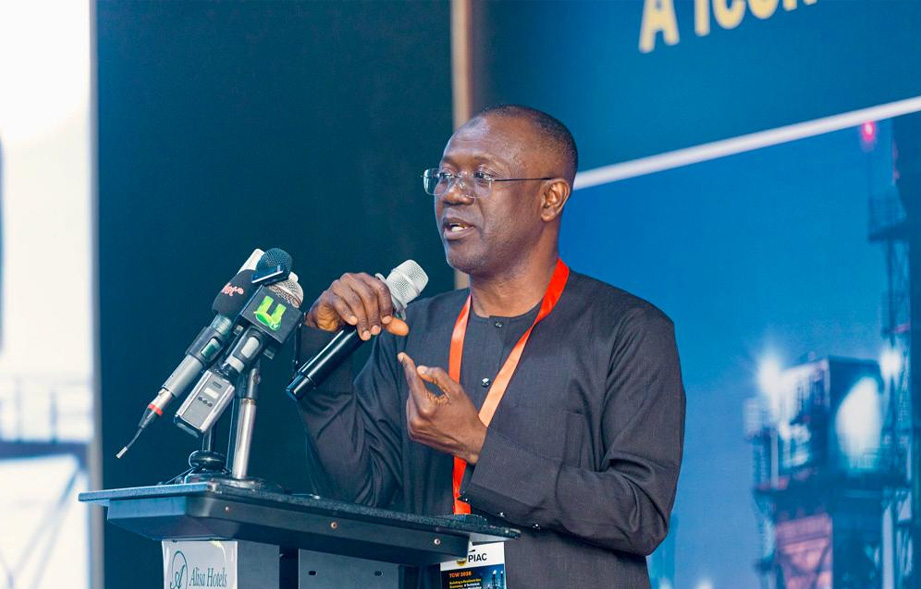
The Corporation highlighted its perspectives at the Public Interest and Accountability Committee’s (PIAC) two-day Technical Consultative Workshop on Building a Resilient Gas Economy in Accra, where GNPC officials shared insights across the upstream, engineering, commercial, and gas business functions.
“Natural gas resource endowment alone is not enough to guarantee monetisation. The natural gas value chain must operate as one integrated, resilient ecosystem,” Deputy Chief Executive, Finance, Commercial & Administration, Hamis Ussif, said.
Natural gas has become increasingly important to Ghana’s energy system and GNPC’s business. In 2025, the Corporation recorded US$952.38 million in gas revenue, representing 65.6 percent of its standalone revenue.
Against this backdrop, GNPC said strengthening the gas sector requires coordinated action across the entire value chain, from upstream investment and production to processing, transportation, commercialisation and downstream consumption.
GNPC is working with upstream partners on more than US$3.5 billion in exploration and production investments, with planned developments expected to increase gas supply from Sankofa to 350 million standard cubic feet per day and Jubilee/TEN to 160 million standard cubic feet per day by 2028.
However, the Corporation noted that increasing production alone will not guarantee reliable domestic supply.
Director of Engineering Simon Essilfie stressed the need to optimise production from the Jubilee, TEN, and Sankofa-Gye Nyame fields while addressing reservoir, processing, and export constraints that can affect gas reliability and availability for the domestic market.
He noted that technical efficiency across the upstream and midstream segments will be critical to ensuring additional gas resources translate into dependable supply for Ghana’s power and industrial sectors.
For GNPC, ensuring adequate supply must be matched by a commercially sustainable market capable of supporting the gas value chain.
As Ghana’s National Gas Aggregator, GNPC is responsible for balancing available gas with market demand and managing the commercial arrangements that support supply security.
Director, Commercial, Kwesi K. Eyiah, said this requires creditworthy offtakers, adequate infrastructure, robust payment-security mechanisms and a financially sustainable aggregation framework capable of supporting long-term supply commitments.
Manager, Gas Business, Emmanuel Tamakloe, further highlighted the link between energy-sector debt and gas supply, noting that persistent payment challenges can affect suppliers', transporters', and producers' ability to sustain operations and invest in new infrastructure.
He identified stronger downstream revenue collection, transparent cost recovery, improved institutional coordination and credible payment-security mechanisms as measures needed to strengthen the commercial sustainability of the gas market.
Looking beyond immediate supply needs, GNPC said the long-term resilience of Ghana’s gas sector will depend on sustained investment in upstream resources and the infrastructure required to bring them to market.
Director, Projects, Dr. Albert Longdon-Nyewan, said Ghana must give investors greater certainty, transparency, and predictability while ensuring investments deliver fair, sustainable value to the country.
“The objective should not simply be to make Ghana cheaper for investors. It should be to make Ghana clearer, more predictable, more efficient and more competitive,” he said.
He also stressed the importance of translating increased investment into meaningful Ghanaian participation through employment, ownership, technology transfer and capability development.
GNPC’s contributions at the workshop underscored the interdependence of the various components of Ghana’s gas sector. Sustaining future resources requires investment; investment must translate into efficient production; additional production requires adequate processing and transportation infrastructure; and reliable supply ultimately depends on a commercially sustainable market that can support the entire value chain.
As Ghana’s National Oil Company and National Gas Aggregator, GNPC remains committed to working with Government, regulators and industry partners to strengthen the gas value chain and maximise the contribution of the country’s natural gas resources to energy security, industrial development and economic growth.