
GNPC Calls for Stronger Link Between Investment and Local Content Development
The Ghana National Petroleum Corporation (GNPC) has called for greater alignment between investment and local content development to strengthen the competitiveness of Ghana’s upstream petroleum industry and create sustainable opportunities for indigenous businesses.
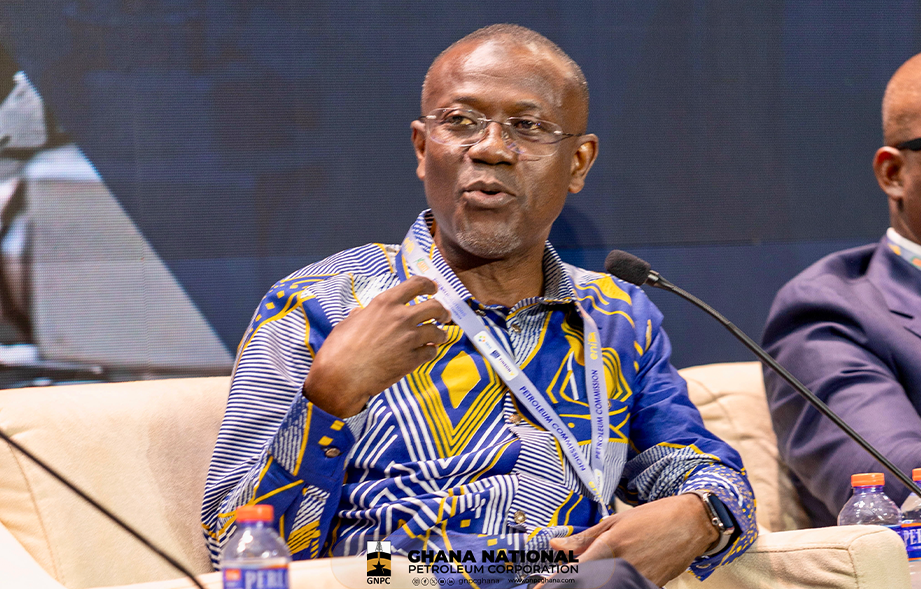
Speaking during a panel discussion on Enhancing Competitiveness in Ghana’s Upstream Sector at the 2026 Local Content Conference and Exhibition (LCCE) in Takoradi, GNPC’s Deputy Chief Executive responsible for Finance, Commercial, and Administration, Mr. Hamis Ussif, said local content and foreign investment must be treated as complementary priorities rather than competing interests.
He explained that the continued growth of Ghanaian businesses in the petroleum sector depends significantly on sustained exploration, production, and investment activities that generate demand for local goods and services.
“You can’t have local content without content,” he remarked, stressing that a decline in industry activity ultimately reduces opportunities for indigenous companies.
Mr. Ussif noted that Ghana had made considerable progress in developing local participation in the upstream petroleum industry through employment, procurement opportunities, and indigenous ownership of petroleum interests.
He acknowledged the contributions of the Petroleum Commission, government institutions, and industry players to these gains but maintained that the next stage of local content development must place greater emphasis on building competitive Ghanaian businesses with the technical capabilities and capacity to undertake more complex industry activities.
He argued that local content should not be viewed as inferior to imported expertise or as an additional cost imposed on investors.
“Local content is not bad content. Local content is not inferior content,” he stated.
According to him, effective partnerships between international oil companies and indigenous businesses should deliver measurable value through local expertise, stronger supply chains, and improved operational resilience.
He explained that when such partnerships increase the overall value created by petroleum operations, both investors and Ghanaian businesses stand to benefit.
Mr. Ussif also linked the discussion to GNPC’s ongoing efforts to strengthen its operational capabilities as the Corporation works towards becoming a more efficient and competitive exploration and production operator.
He cited GNPC Explorco’s growing responsibilities in the Voltaian Basin as part of the Corporation’s efforts to develop practical operatorship experience and strengthen indigenous technical capacity.
Looking ahead, he said GNPC’s longer-term ambition is to build an ecosystem of capable Ghanaian service companies that can grow alongside the Corporation and eventually pursue opportunities beyond Ghana’s borders.
Drawing on the experiences of national oil companies such as Petrobras and Petronas, he noted that building strong domestic capabilities could provide a foundation for future participation in international markets.
He emphasised that achieving this would require continued investment, stronger partnerships, and a deliberate effort to position Ghanaian companies as competitive contributors to the petroleum industry, not just beneficiaries of regulatory requirements.