

GNPC, ENI, and Vitol Empower Central Region Fisherfolk through Artisanal Livelihood Support Programme
The Ghana National Petroleum Corporation (GNPC), in collaboration with ENI and Vitol, has successfully concluded a four-day artisanal livelihood empowerment programme for fishing communities across the Central Region. The initiative led by ENI Ghana with support from its partners forms part of ongoing efforts to promote safe, sustainable, and mutually beneficial coexistence between offshore petroleum operations and artisanal fishing activities.
The programme builds on a similar initiative carried out in the Western Region earlier in April, in which fishermen in fishing communities across seven Metropolitan, Municipal, and District Assemblies (MMDAs) received similar support. The Central Region phase is the second stage of this wider programme, with plans to extend it to the Greater Accra and Volta Regions in the next phases.
The programme was carried out in four areas: KEEA/Cape Coast/AAK, Mfantseman, Ekumfi, and Gomoa West/East/Effutu/Awutu. The initiative supported a total of 400 verified fishermen, comprising 100 beneficiaries from each area. Each beneficiary received essential fishing gear to enhance safety and improve productivity at sea. Items distributed included 5 sets of fishing threads, 5 sets of ropes, 1 sack of buoys (100 pieces), and 1 life jacket.
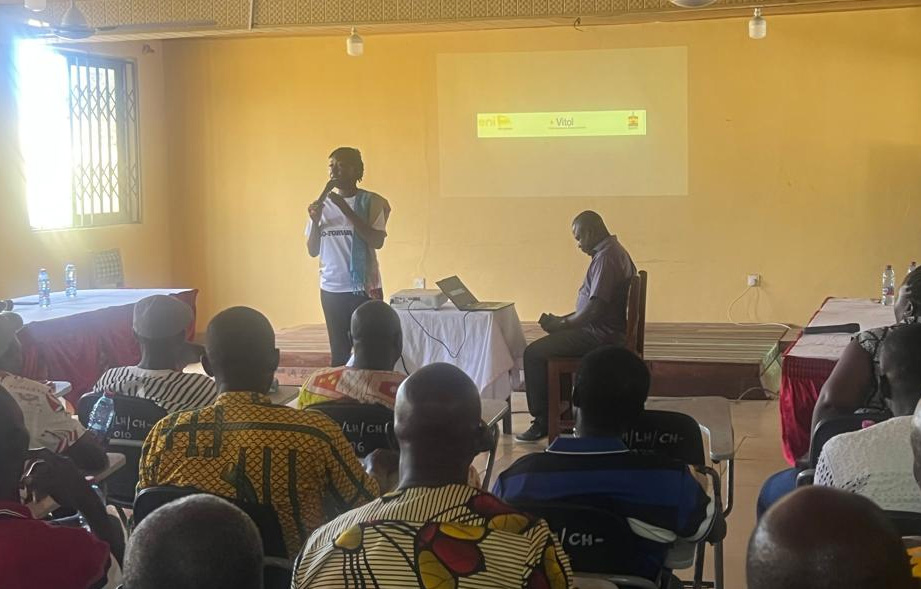
Beyond the distribution of equipment, the initiative placed strong emphasis on capacity building. Participants underwent structured training sessions covering fisheries management, sustainable fishing practices, and livelihood diversification. Facilitated by experts from Help Foundation Africa, Mundo Enterprise, and the Fisheries Commission, the sessions addressed key topics such as business planning for artisanal fishing, record-keeping, profitability analysis, regulatory compliance, and alternative income-generating activities such as aquaculture, agro-processing, beekeeping, and crafts.
Mr. Emmanuel Dolvo, Director of the Central Regional Fisheries Commission, sensitised the fishermen on best practices and regulatory requirements under the Fisheries Act and associated regulations, with particular emphasis on sustainable resource management, gear restrictions, and the importance of respecting safety exclusion zones around offshore installations.
There was high participation across all the clusters, with traditional leaders, chief fishermen, and fisheries authorities playing a key role in beneficiary validation, mobilisation and sensitisation. Their involvement reinforced confidence in the programme and strengthened compliance messaging.
Key stakeholder engagements highlighted persistent challenges facing coastal communities, including declining fish stocks, illegal fishing practices, high operational costs, and inadequate infrastructure. Participants also called for improved access to financial support, stronger enforcement of fishing laws, and more support, such as reliable pre-mix fuel supply and training at landing beaches.
Ms. Martha Kumi-Otopah, speaking on behalf of GNPC, reaffirmed the Corporation’s commitment to promoting sustainable livelihoods while safeguarding critical offshore energy infrastructure. In her remarks, she urged beneficiaries to consistently observe maritime safety protocols, including strict adherence to the 500-meter exclusion zones around the offshore installations, which she stressed are vital for operational safety and national energy security.
Echoing the message of compliance with safety protocols, Mr. Amin Alhassan, ENI’s Monitoring and Evaluation Coordinator, underscored the critical issue of incursions into the 500-meter exclusion zones. He emphasised that the success and safety of offshore operations underpin the ability of ENI and its partners to provide and distribute essential equipment to fishing communities across the various clusters.
The programme highlights GNPC and its partners’ broader commitment to social investment, environmental stewardship, and strengthening community resilience within host fishing communities. Through continued collaboration with partners and stakeholders, the Corporation aims to support sustainable livelihoods while promoting responsible marine resource management across Ghana’s coastal belt.