

GNPC Shares Petroleum Sector Experience with Eswatini National Oil Company
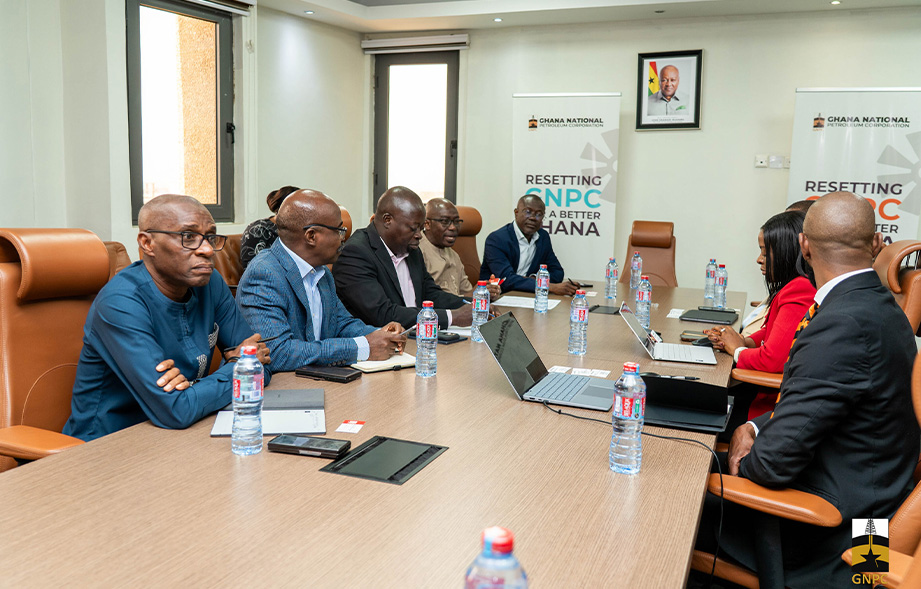
The Ghana National Petroleum Corporation (GNPC) is hosting a three-member delegation from the Eswatini National Petroleum Company (ENPC) on a study visit to share Ghana’s experience in developing its petroleum sector, strengthen institutional capacity, and explore opportunities for collaboration between the two National Oil Companies.
The delegation, led by ENPC Board Member Dumezweni Dlamini, comprises Chief Executive Officer Nontombi Motsa and General Manager, Strategy & Communications, Musa Shongwe. The delegation is engaging GNPC and other key institutions across Ghana’s petroleum value chain to gain insights into the country’s institutional, technical and commercial experience.
Speaking on the purpose of the visit, Ms. Motsa said ENPC was keen to learn from Ghana’s experience and the evolution of its petroleum sector. She said as Eswatini continues to build its petroleum sector and institutional capabilities, it was valuable to draw lessons from an African National Oil Company that had developed through a similar journey and to identify areas of mutual interest and collaboration.
Welcoming the delegation, GNPC Chief Executive Mr. Kwame Ntow Amoah outlined the Corporation’s evolution over four decades and highlighted key developments in Ghana’s petroleum sector. He explained the respective roles of the Ministry of Energy and Green Transition in providing policy direction, the Petroleum Commission in regulating the upstream sector, and GNPC in representing the State’s commercial interests and participating in petroleum operations as Ghana’s National Oil Company.
Mr. Amoah noted that GNPC performed broader sector functions during its formative years, with these responsibilities evolving as Ghana’s petroleum industry matured. He also highlighted the Corporation’s role as a partner in upstream petroleum operations, its mandate as the National Gas Aggregator, and the strategic use of subsidiaries to build capabilities and create value across the petroleum value chain.
He emphasised that GNPC’s strategy is not to compete at every point of the value chain, but to build an increasingly integrated organisation that leverages its expertise and commercial interests across upstream, midstream and downstream activities.
The Chief Executive identified sustaining production, arresting production decline and advancing exploration as key priorities for GNPC. He also noted growing interest from major international energy companies in Ghana’s upstream sector as an encouraging sign of renewed opportunities for exploration and investment.
Deputy Chief Executive, Finance, Commercial & Administration, Hamis Ussif, shared lessons from GNPC’s formative years and encouraged ENPC to develop an institutional structure aligned with the current stage of Eswatini’s petroleum-sector development. He stressed the importance of establishing the necessary institutional foundations before significant exploration and production activities commence, while highlighting the growing importance of natural gas to GNPC’s business, particularly in supplying power generation and industry.
Deputy Chief Executive, Exploration & Production, Michael Aryeetey, emphasised the importance of capacity building in developing a sustainable petroleum industry. He highlighted the need to build technical, commercial and institutional capabilities alongside a strong local content framework and an appropriate legal and regulatory environment.
Mr. Aryeetey assured the ENPC delegation of GNPC’s readiness to share its experience and provide technical assistance, where required, as the Eswatini NOC continues to develop its institutional and petroleum-sector capabilities.
The engagement also included a presentation on GNPC’s mandate, assets, organisational structure, and medium-to-long-term strategic direction, giving the delegation further insight into the Corporation’s evolution and current operations.
Mr. Dlamini described the engagement as an opportunity for ENPC to draw on relevant African expertise and experiences as Eswatini develops its petroleum ambitions. He expressed the delegation’s interest in identifying best practices that could be adapted to Eswatini’s circumstances while strengthening the relationship between the two National Oil Companies.
As part of the study visit, GNPC will facilitate further engagements between the ENPC delegation and key institutions across Ghana’s petroleum value chain, including the Petroleum Commission and Tema Oil Refinery (TOR).
The visit underscores the value of African knowledge exchange and peer learning among National Oil Companies, particularly in building institutional capacity, developing local expertise and establishing partnerships to support the responsible and sustainable development of Africa’s energy resources.